Pet owners are paying more attention to the materials, durability, and environmental impact of the products they bring into their homes. This shift is particularly noticeable in the pet supplies market, where practical and sustainable alternatives are gaining attention. Eco-friendly cardboard cat scratchers are becoming a popular choice because they combine natural scratching surfaces, lightweight construction, and recyclable paper-based materials.
Unlike many traditional scratching products made with synthetic fabrics, plastic components, or bulky wooden structures, corrugated cardboard cat scratchers offer a simpler alternative. They provide cats with a dedicated place to scratch while giving pet owners another way to reduce unnecessary plastic use in everyday pet care.
For pet product brands and retailers, this trend also creates opportunities to introduce functional, attractive, and customizable products. HOMER offers corrugated cardboard cat scratchers designed for different shapes, sizes, and branding requirements, helping businesses respond to changing consumer preferences.
Why Are Eco-Friendly Cardboard Cat Scratchers Becoming More Popular?
The growing popularity of eco-friendly cat scratchers comes down to several practical factors. Pet owners want products that satisfy their cats' natural behaviors without adding unnecessary materials to their living spaces. Cardboard scratchers address both needs through a relatively simple design.
There are several reasons behind this growing interest:
- Material preferences: Paper-based products appeal to consumers looking for alternatives to plastic-heavy pet accessories.
- Natural scratching texture: Corrugated cardboard provides a layered surface that many cats enjoy scratching.
- Practical design: Lightweight construction makes these products easy to move and position around the home.
- Product versatility: Cardboard can be shaped into scratching boards, cat beds, lounges, and multifunctional cat houses.
- Customization opportunities: Brands can develop different shapes, colors, and printed designs to match their product collections.
These advantages make cardboard cat scratchers appealing to both individual pet owners and businesses looking for differentiated pet products.
Environmental Benefits of Corrugated Cardboard Cat Scratchers
One of the main reasons consumers consider cardboard cat scratchers is their paper-based construction. Corrugated cardboard can often be recycled through suitable local paper recycling systems, provided it is clean and free from incompatible coatings, adhesives, or other materials.
Compared with products that rely heavily on plastic and synthetic components, a well-designed cardboard scratcher may offer a more straightforward material recovery option at the end of its useful life.
However, not every cardboard scratcher has the same environmental profile. Recycled content, adhesive composition, printing methods, protective coatings, and packaging materials all influence the overall sustainability of a finished product.
For consumers who want to make more responsible purchasing decisions, it is worth checking the material specifications rather than relying on an eco-friendly label alone.
For pet brands, selecting a manufacturer that can explain material options and production details is an important step in developing a credible sustainable product range.
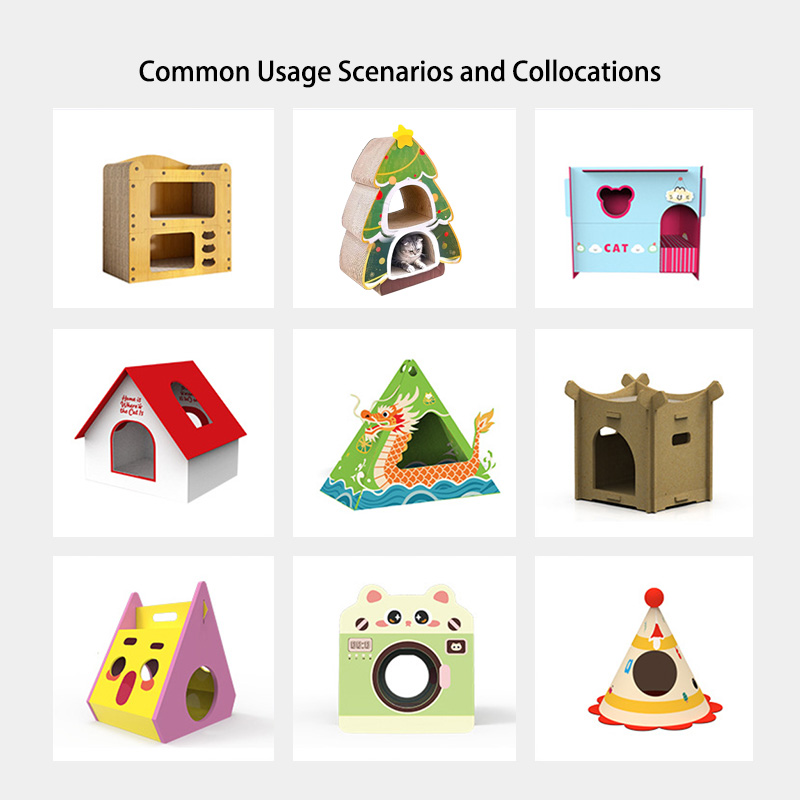
The image above illustrates how corrugated paper can be developed into different cat house structures and functional pet furniture. This flexibility makes cardboard a useful material for brands that want to expand beyond conventional scratching pads.
How Cardboard Scratchers Support Natural Cat Behavior
Scratching is a normal and important behavior for domestic cats. Cats scratch to maintain their claws, stretch their bodies, mark territory, and release energy. Providing an appropriate scratching surface helps redirect this behavior away from sofas, carpets, and other household furniture.
Corrugated cardboard has a layered structure that creates resistance when a cat pulls its claws across the surface. This texture can make it an attractive scratching option, particularly for cats that prefer horizontal or slightly inclined scratching surfaces.
Different cats have different preferences. Some enjoy flat scratching boards, while others prefer curved lounges or enclosed spaces that combine scratching with resting.
HOMER's reversible cardboard cat scratcher panels offer another product direction for brands interested in combining scratching functionality with cat house designs.
When choosing a scratching product, pet owners should consider the cat's size, preferred scratching position, and available living space. A suitable design is more likely to become part of the cat's regular daily routine.
Cardboard Cat Scratchers vs. Traditional Scratching Posts
Cardboard scratchers and traditional scratching posts serve the same basic purpose, but their materials, construction, and everyday usability can be quite different.
| Comparison | Cardboard Scratcher | Traditional Scratching Post |
|---|---|---|
| Main materials | Corrugated cardboard | Sisal, wood, fabric, or synthetic materials |
| Weight | Generally lightweight | Often heavier |
| Design options | Flat, curved, lounge, and custom shapes | Posts, towers, and furniture structures |
| Material recovery | May be recyclable depending on construction | Often requires separating different materials |
| Maintenance | Requires removing loose cardboard debris | Requires checking fabric, rope, and structural wear |
| Customization | Flexible printing and shape options | Depends on material and construction |
Neither option is automatically better for every cat or every household. Sisal posts may be more suitable for cats that prefer vertical scratching, while cardboard boards are often a convenient choice for cats that like scratching horizontally.
For brands, offering different formats allows retailers to reach a wider range of pet owners instead of relying on one standard product design.
What Makes a High-Quality Cardboard Cat Scratcher?
Not all cardboard scratchers deliver the same experience. Material density, structural stability, bonding quality, and surface finishing all affect product performance.
When evaluating a cardboard cat scratcher, consider the following factors.
Corrugated Board Quality
The cardboard should have a consistent structure and sufficient strength to withstand repeated scratching. Poor-quality board may collapse too quickly, reducing product usability and creating unnecessary loose debris.
Adhesive and Material Safety
Adhesives are an important part of laminated cardboard construction. Manufacturers should be able to provide clear information about the adhesives and other materials used. Pet owners should avoid products with unclear material descriptions or strong chemical odors.
Stable Construction
A scratching board that moves around during use may discourage cats from using it. A stable base, suitable dimensions, and well-bonded layers help create a more comfortable scratching experience.
Practical Shape and Size
The right dimensions depend on the intended cat size and product application. A flat board may suit smaller spaces, while a curved scratching bed can provide an additional resting area.
Easy-to-Clean Surface
Cardboard scratchers naturally release some small paper fibers during use. A well-constructed product should maintain its overall shape during normal scratching and be easy for owners to clean around.
These details are also important for retailers and distributors who want to reduce customer complaints and maintain consistent product quality.
Different Cardboard Cat Scratcher Designs for Modern Homes
Product design has become an important factor in the pet supplies market. Many consumers want pet accessories that fit naturally into their home interiors rather than looking like purely functional equipment.
Corrugated cardboard offers flexibility in shape and construction, allowing manufacturers to develop several product styles.
Flat Cardboard Scratching Boards
Flat boards are a practical option for cats that prefer horizontal scratching. Their compact structure makes them easy to place beside sofas, under windows, or near a cat's favorite resting area.
Curved Cat Scratcher Beds
Curved designs combine scratching and lounging functions. Cats can scratch the surface and then use the curved structure as a resting place.
HOMER's corrugated cardboard cat scratcher bed is an example of this multifunctional design direction.
Cardboard Cat Houses
Cat houses provide a more enclosed environment where cats can rest, hide, and observe their surroundings. Combining a resting area with a scratching surface can make better use of limited indoor space.
Custom-Shaped Cat Furniture
For brands developing their own pet product collections, customized cardboard structures offer more opportunities to create recognizable designs. Shapes, dimensions, and printed graphics can be adjusted according to different market requirements.
For example, cardboard cat house furniture provides another direction for businesses looking to develop functional paper-based pet furniture.
Why Custom Cardboard Cat Scratchers Matter for Pet Product Brands
As the pet supplies market becomes more competitive, private-label and custom-designed products offer retailers an opportunity to distinguish their collections.
Rather than selling another generic scratching board, businesses can develop products that reflect their own brand identity and target customer preferences.
Customization can include:
- Product dimensions: Different sizes for kittens, adult cats, and larger breeds.
- Structural design: Flat boards, curved beds, reversible panels, and integrated cat houses.
- Color selection: CMYK and Pantone color options for brand consistency.
- Custom printing: Branded graphics, logos, patterns, and promotional designs.
- Surface finishing: Available printing and finishing techniques selected according to the product's intended use.
- Packaging: Packaging formats suited to retail display, e-commerce, and wholesale distribution.
HOMER provides custom design and printing services for corrugated cardboard cat scratchers and paper cat houses. The company supports different product shapes, including square, rectangular, circular, classic, and customer-designed structures.
Its product specifications also include CMYK and Pantone color options, with dimensions developed according to customer requirements. Printing techniques include embossing, matte or glossy lamination, stamping, UV coating, and foil finishing, subject to product suitability.
For businesses planning a private-label pet supplies range, these capabilities can help turn an initial product concept into a market-ready design.
How to Choose a Reliable Cardboard Cat Scratcher Manufacturer
Choosing the right manufacturing partner is just as important as choosing the product design. Retailers, wholesalers, and e-commerce brands need a supplier that can understand their requirements and maintain consistent production quality.
Before placing a bulk order, consider these questions:
- Can the manufacturer provide samples before mass production?
- Can the cardboard specifications and material composition be clearly explained?
- Does the supplier support custom dimensions and product structures?
- Are printing colors and finishing details consistent with the approved design?
- Can the manufacturer provide suitable packaging for international shipping?
- Are production lead times and quality inspection procedures clearly communicated?
HOMER is based in Xiamen, China, and offers custom paper cat scratchers and cat houses for different business requirements. Its listed corrugated cardboard cat scratcher model HPC-L2618 supports customized shapes, CMYK and Pantone colors, and professional design assistance.
For this model, the published product information indicates a sample production period of approximately 5–10 days for full-color printed products and a bulk production lead time of approximately 15–30 days, depending on order quantity and specifications.
Businesses interested in developing their own pet product collections can explore HOMER's custom corrugated cardboard cat scratcher manufacturing service to discuss product details, samples, and branding options.
The Future of Sustainable Cat Products
The demand for more environmentally conscious pet products is encouraging manufacturers to reconsider materials, product structures, and packaging choices. Cardboard cat scratchers are a practical example of how everyday pet accessories can evolve through relatively simple material and design decisions.
For consumers, the appeal is straightforward: a scratching surface that supports natural feline behavior, fits easily into the home, and can offer a paper-based alternative to more material-intensive products.
For pet brands and retailers, the opportunity goes further. Custom shapes, branded printing, multifunctional designs, and suitable packaging can help create a distinctive product range for different markets.
HOMER combines corrugated paper product manufacturing with custom design and printing services, supporting businesses that want to develop cardboard cat scratchers and paper cat houses under their own brands.
As sustainability becomes a more important consideration in purchasing decisions, well-designed cardboard pet products have the potential to remain a valuable category in the evolving pet supplies market.
Frequently Asked Questions About Eco-Friendly Cardboard Cat Scratchers
Are cardboard cat scratchers environmentally friendly?
Cardboard cat scratchers can be a more environmentally conscious option because corrugated paper is recyclable in many local recycling systems. However, actual recyclability depends on recycled content, adhesives, coatings, inks, and local recycling requirements.
Why do cats like corrugated cardboard scratchers?
Cats often enjoy the layered texture of corrugated cardboard because it provides resistance when they pull their claws across the surface. Scratching also supports natural behaviors such as claw maintenance, stretching, and territorial marking.
How long does a cardboard cat scratcher last?
Its lifespan depends on cardboard density, construction quality, usage frequency, and the cat's scratching habits. A well-constructed scratcher can withstand regular use, but it should be replaced when it becomes excessively worn or unstable.
Can cardboard cat scratchers be customized?
Yes. Manufacturers can customize product shapes, dimensions, colors, printing, and packaging. HOMER supports custom corrugated cardboard cat scratchers and paper cat houses for private-label and wholesale projects.
Are cardboard cat scratchers suitable for all cats?
Many cats enjoy cardboard scratching surfaces, but preferences differ. Some cats prefer horizontal boards, while others prefer vertical sisal posts. Choosing the right shape and size according to a cat's behavior is important.
Can cardboard cat scratchers help protect furniture?
Yes. Placing a scratching board near furniture that a cat frequently scratches can encourage the cat to use the designated scratching surface instead. It is a practical way to redirect scratching behavior, although it does not guarantee that furniture scratching will stop completely.
Does HOMER provide OEM and custom cat scratcher services?
HOMER offers custom design and printing for corrugated cardboard cat scratchers and paper cat houses. Available options include different shapes, dimensions, CMYK and Pantone colors, and selected printing and finishing techniques. Businesses can contact HOMER to discuss their project requirements.