Choosing the right inner lining is one of the most important decisions when developing composite paper cans for food, tea, coffee, and other packaged products. The lining is not simply an extra layer inside the container. It helps determine how the package interacts with the contents, how well it resists moisture or grease, and whether the overall structure is suitable for the intended storage and sealing conditions.
For brands and packaging buyers, the best inner lining depends on the product's sensitivity, storage environment, required barrier performance, and packaging structure. Aluminum foil liners, PE-coated paper, coated white paper, and food-grade paper liners each serve different purposes. Understanding these differences makes it easier to select a practical composite paper can solution without adding unnecessary material or cost.
At SengKen, published composite paper can products demonstrate several of these lining configurations, including aluminum foil-lined tea canisters and paper cans with different inner material options. This guide explains how to evaluate them and choose the right lining for your packaging application.
Why Does the Inner Lining Matter in Composite Paper Cans?
A composite paper can generally combines a paper-based outer structure with an inner lining and suitable top and bottom closures. While the paper body provides the container's shape and structural support, the inner lining forms the surface that faces the packaged product.
The lining can influence several important packaging properties:
- Moisture resistance: Helps reduce the effect of external humidity on moisture-sensitive contents.
- Grease resistance: Helps prevent oils and fats from penetrating the paper structure.
- Product contact suitability: The selected inner material should be appropriate for the intended product-contact application and comply with applicable food-contact requirements.
- Aroma and freshness protection: A suitable barrier structure can help limit the movement of moisture and odors, depending on the material and complete package design.
- Packaging compatibility: The lining must work with the paper tube structure, lid, sealing method, and filling process.
It is important to remember that the lining does not work independently. The paper body, seams, bottom construction, opening system, and closure all contribute to the performance of the finished package. A high-barrier inner material cannot compensate for an unsuitable or poorly sealed package structure.
Common Inner Lining Materials for Composite Paper Cans
There is no single lining material that is suitable for every product. The following options are useful starting points when comparing composite paper can packaging structures.
Aluminum Foil Liner
Aluminum foil is commonly selected when packaging requires stronger protection against moisture, light, and external influences. It is particularly relevant for products that are sensitive to humidity, aroma loss, or changes in storage conditions.
For example, SengKen's Tea Packaging Paper Cardboard Cans with Tinplate Lids use a middle kraft paper core with an inner coated aluminum foil liner, rigid grey cardboard, and an outer printed paper layer. This is a real example of how an aluminum foil liner can be incorporated into a composite tea can structure.
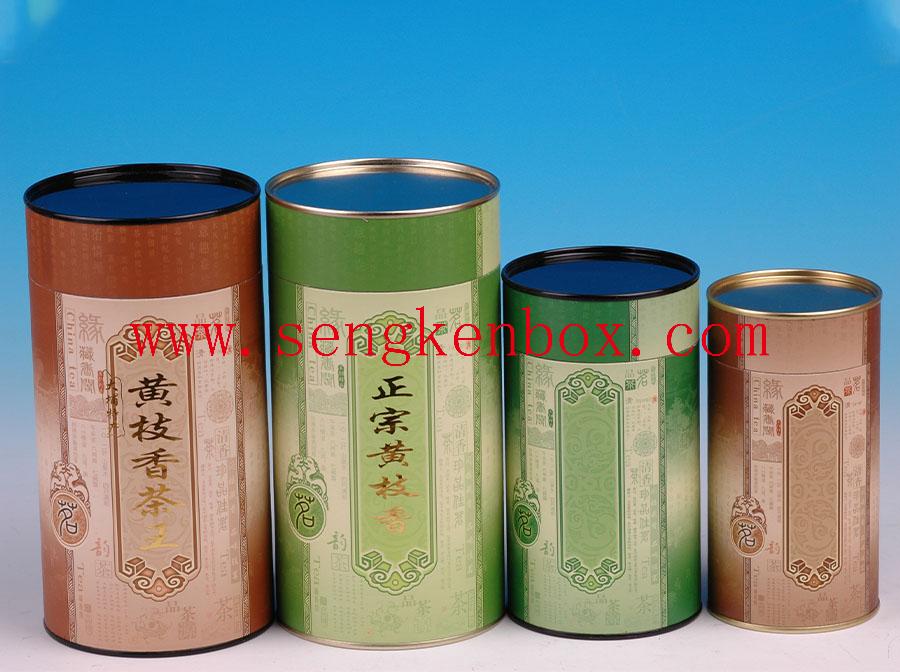
Suitable applications: Tea, dry food, powdered products, and other products where moisture or light protection is an important consideration.
However, aluminum foil should not automatically be selected for every paper can. Buyers should consider the actual product requirements, the complete laminate or coating structure, the sealing method, and the required food-contact documentation.
PE-Coated Paper
PE-coated paper combines a paper substrate with a polyethylene coating. The coating can help improve resistance to moisture and provide a functional inner surface for certain packaging applications.
This option may be considered when the product needs a moisture-resistant paper-based structure but does not necessarily require the same barrier approach as an aluminum foil liner. Its suitability depends on the coating specification, thickness, product characteristics, and expected storage conditions.
SengKen lists PE-coated paper as one of the available inner material options for its Rolled Edge Paper Can with Metal Lid and Bottom for Coffee Packaging. The product page also lists aluminum foil liner and coated white paper as alternative inner structures.
Coated White Paper
Coated white paper is another option listed in SengKen's coffee paper can product specifications. It can be considered for packaging applications where a paper-based inner layer is suitable for the contents and the required protection level.
Compared with a foil-based structure, a coated paper liner may be appropriate for applications with different barrier priorities. However, buyers should not assume that all coated paper liners provide the same moisture, grease, or aroma barrier. The actual coating and paper specifications need to be confirmed before production.
Food-Grade Paper Liner
Some composite paper cans use a food-grade paper liner as the product-contact layer. This type of structure may be suitable for products that do not require a high moisture or oxygen barrier, provided the selected paper material and complete package meet the relevant food-contact requirements.
SengKen also lists a chocolate packaging paper can with a food-grade ivory board inner layer. This demonstrates that the inner lining can be selected according to the product and packaging design rather than using aluminum foil in every application.
When choosing a paper liner for direct food contact, always confirm the material specification and applicable compliance documents with the packaging supplier. The term "food grade" should be supported by the relevant material and regulatory information for the intended market.
How to Choose the Right Inner Lining for Different Products
The most effective way to select an inner lining is to start with the product being packaged. Different products have different sensitivities to moisture, oil, light, oxygen, and aroma loss. The following examples provide a practical selection reference.
Tea Packaging: Focus on Moisture and Aroma Protection
Tea can absorb moisture and external odors, which may affect its quality during storage. For many tea packaging applications, an aluminum foil liner is worth considering because it can provide a stronger barrier against moisture and light than an ordinary uncoated paper layer.
The final result still depends on the complete packaging structure, including the lid and sealing method. A well-selected liner should be paired with a closure that helps maintain the intended storage environment after filling.
SengKen's rolled edge tea packaging paper cans provide a practical reference for this application, combining a kraft paper core, coated aluminum foil liner, rigid grey cardboard, and a printed outer layer.
Coffee Packaging: Consider Aroma, Moisture, and Closure Design
Coffee packaging requires attention to more than the inner lining. Ground coffee and roasted coffee beans can be affected by moisture, oxygen exposure, and aroma loss. The appropriate structure depends on the coffee format, filling process, storage period, and whether a one-way degassing valve is required.
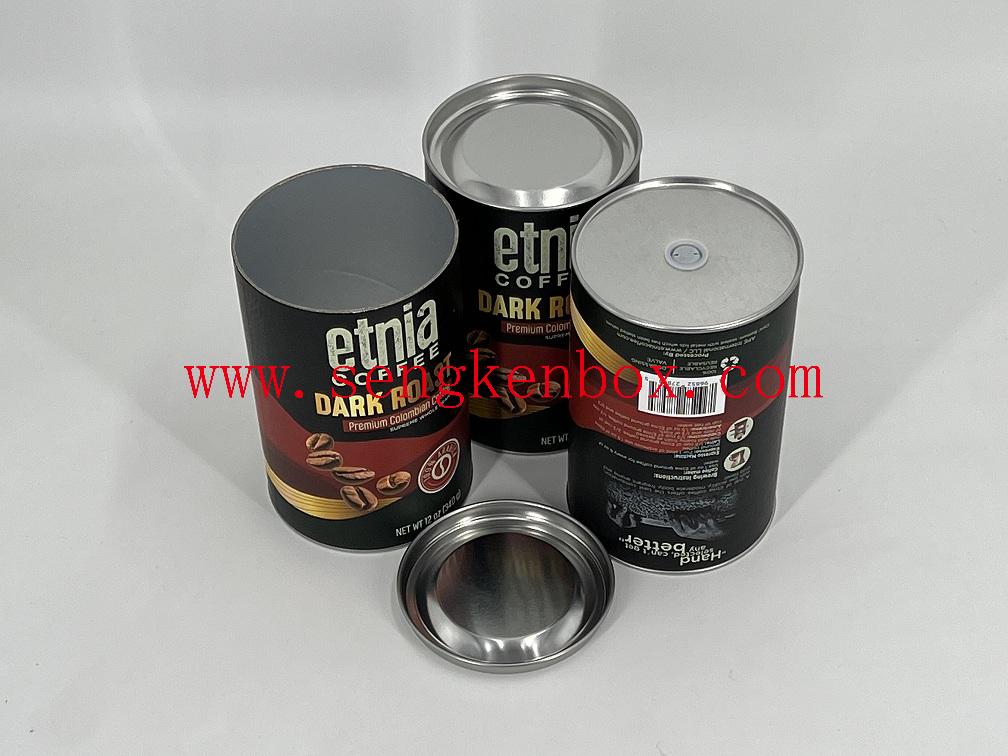
SengKen's coffee paper can with metal lid and bottom lists several inner structure options, including coated white paper, aluminum foil liner, and PE-coated paper. Its listed closure options include aluminum foil easy peel-off lids, easy open ends, plastic lids, and tinplate lids. The product page also references a valve option in its coffee packaging design.
For coffee brands, it is important to confirm whether the package needs a degassing valve, what barrier level is required, and how the inner liner works with the selected closure. The liner alone does not determine the package's overall oxygen or aroma protection.
Salt, Seasonings, and Powdered Foods: Check Moisture and Grease Resistance
Salt and powdered seasonings can be sensitive to moisture. Some food products may also contain oils or ingredients that require grease-resistant packaging. In these cases, an aluminum foil liner or a suitable coated inner paper may be considered, depending on the product formulation and storage requirements.
For example, SengKen's Moisture-Proof Food Grade Paper Can with Seal Cover is described as a composite food-grade canister with a moisture-proof aluminum foil liner. Its listed construction includes a middle kraft paper core, inner coated aluminum foil liner, printed outer paper, and an aluminum foil easy peel-off lid.
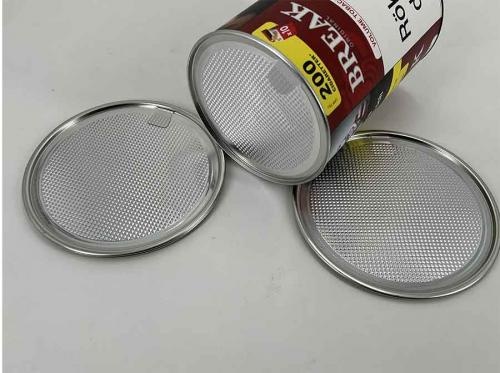
For products that may absorb moisture or form lumps, buyers should also evaluate the lid seal and the package's resistance to moisture during transportation and storage.
Important Factors to Confirm Before Selecting a Liner
Before confirming a composite paper can specification, packaging buyers should review several details with their supplier. This helps avoid choosing a material based only on its name or general description.
- Product characteristics: Is the content dry, oily, powdered, aromatic, or sensitive to light and humidity?
- Direct food contact: Will the inner lining directly touch the product? If so, confirm the relevant food-contact suitability and documentation for the destination market.
- Required barrier performance: Which factors need to be controlled: moisture, oxygen, grease, light, or aroma transfer?
- Closure and sealing: Will the can use an easy peel-off lid, tinplate lid, plastic lid, or another closure? Is a valve required?
- Filling conditions: Will the product be filled at room temperature or under special processing conditions?
- Storage and transportation: Will the package be exposed to high humidity, temperature changes, or long-distance shipping?
- Recycling and material requirements: Does the brand have specific requirements for material composition, recyclability, or packaging disposal?
It is also useful to request a sample for testing with the actual product. A sample evaluation can help check the fit between the liner, can body, lid, and filling process before a larger production order is confirmed.
Why the Complete Paper Can Structure Matters as Much as the Liner
When comparing packaging suppliers, it is easy to focus on the inner lining material and overlook the rest of the container. In practice, the performance of a composite paper can depends on how all its components work together.
The paper core provides the cylindrical structure. The inner lining is selected according to product-contact and barrier requirements. The outer paper layer supports printing and brand presentation, while the top and bottom closures help complete the package.
For example, SengKen's coffee paper can product lists a middle kraft paper core, multiple inner liner choices, different outer paper options, and several lid configurations. Its tea paper can product uses a different listed structure with a coated aluminum foil liner and rigid grey cardboard. These examples show why the complete material combination should be evaluated rather than selecting a liner in isolation.
For more options and product configurations, explore SengKen's Cylinder Paper Tube Packaging range, which includes different paper can and paper tube packaging styles.
How SengKen Supports Custom Composite Paper Can Packaging
Different products require different combinations of paper materials, inner liners, closures, dimensions, and printing finishes. SengKen's published product range demonstrates options such as aluminum foil-lined tea cans, moisture-proof food-grade paper cans, and coffee paper cans with multiple inner material and lid choices.
Depending on the product and packaging requirements, buyers can discuss the paper core, inner lining, outer paper, can dimensions, printing, surface finishing, and closure configuration with the supplier. The published product specifications also list finishing options such as matte or gloss lamination, varnishing, spot UV, and hot foil stamping.
Rather than choosing a lining based on a general assumption, provide your supplier with details about the packaged product, its storage conditions, and the expected packaging performance. This makes it easier to evaluate a suitable structure and confirm the material combination before production.
If you are developing a new paper can for tea, coffee, powdered food, or other products, you can contact SengKen to discuss your packaging requirements and customized paper can options.
Frequently Asked Questions About Inner Linings for Composite Paper Cans
What is the best inner lining for composite paper cans?
There is no universal best option. Aluminum foil liners are worth considering when moisture and light protection are important. PE-coated paper and coated white paper may suit other packaging requirements. The right choice depends on the product, required barrier performance, and closure design.
Is aluminum foil lining suitable for food packaging?
Aluminum foil can be used in food packaging structures, but the complete material construction must be suitable for the intended food-contact application. Buyers should confirm the relevant material specifications and compliance documents for their target market.
Can composite paper cans use PE-coated paper as an inner liner?
Yes. PE-coated paper is one of the inner material options listed on SengKen's coffee paper can product page. Its suitability depends on the product characteristics, coating specification, and required barrier performance.
Which inner lining is suitable for tea paper cans?
An aluminum foil liner is a common option to consider for tea packaging because moisture and light protection can be important for tea quality. SengKen lists a tea paper can structure using an inner coated aluminum foil liner. The complete closure and storage requirements should also be evaluated.
What inner lining should be used for coffee paper cans?
The selection depends on whether the coffee is whole bean or ground, its filling conditions, and the required protection against moisture, oxygen, and aroma loss. SengKen lists coated white paper, aluminum foil liner, and PE-coated paper among the inner material options for its coffee paper can. A valve and suitable closure may also need to be considered.
Does the inner lining affect the shelf life of packaged food?
It can influence the package's ability to protect the contents from external factors such as moisture, oxygen, and light. However, shelf life depends on multiple factors, including the product formulation, processing, filling conditions, complete packaging structure, and storage environment. It should be established through appropriate product and packaging testing.
Can the inner lining and paper can size be customized?
SengKen's published paper can products list different inner material options and customizable dimensions. Buyers can discuss the required diameter, height, liner, outer paper, printing, and closure configuration according to the intended application.
What information should I provide when requesting a custom paper can?
Provide the product type, filling weight or volume, required can dimensions, product-contact requirements, moisture or grease protection needs, preferred lid style, printing artwork, and target market. These details help the supplier assess a suitable packaging structure.