Start with three factors: application fit, technical performance, and cost plus compliance. Application fit asks whether the tray suits sushi, takeaway, or food presentation. Each use case prioritizes different traits. Sushi leans on grease resistance and clean looks. Takeaway demands durability and stackability. Presentation lives or dies on print quality and shape. Technical performance covers how the board handles moisture, weight, and movement during transport. Cost and compliance keep the choice practical and safe for food contact. Run every option through these three filters, and the shortlist writes itself. Elementscup supplies Custom Paper Food Trays matched to each use case, so you can compare options on equal terms.
Key Takeaways
-
Match the tray to its use: sushi needs grease resistance, takeaway needs durability, and presentation needs great print quality.
-
Check technical performance like moisture resistance and strength to keep food safe and intact during transport.
-
Confirm food safety compliance and budget before you order to avoid problems and extra costs.
-
Test samples with your real food to ensure the tray works perfectly for your needs.
-
Use a simple three-step checklist: name the use case, set must-have traits, and confirm compliance and budget.
Paper Tray Types and Materials
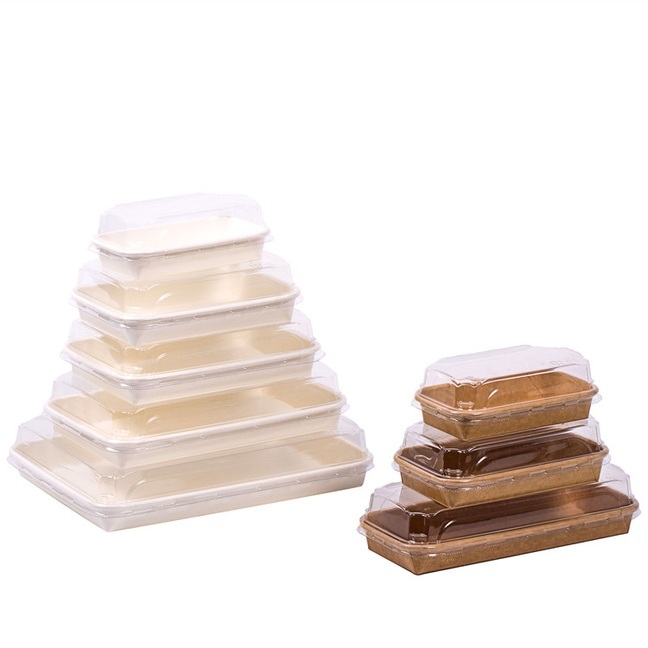
Board choice comes down to three things: how much weight the tray carries, how far it travels, and the look you want on the table. A dense paperboard holds its shape under a loaded portion. A lighter grade may bow once the food settles. Distance matters too, because a tray that sits on a counter for ten minutes faces less stress than one riding in a delivery bag. Match the board to the job, and the rest of the decision gets easier.
Common Tray Styles and Best Uses
Style sets the serving profile before you think about material. Custom Printed Paper's tray guide lays out the main formats clearly:
|
Tray Style |
Best For |
|---|---|
|
Open food boats |
Fries and street-food portions |
|
Lidded formats |
Takeaway services, with more protection against handling and external exposure |
|
Compartments |
Combo meals, for food separation and organized serving |
|
Foldable trays |
Fast food, snacks, and appetizers |
Size follows the same logic. Custom Printed Paper lists small trays at 4″ × 4″ × 1.5″ for fries and snacks, medium trays at 6″ × 5″ × 2″ for burgers and sandwiches, and large trays at 9″ × 6″ × 3″ for sharing portions. Graphic Packaging notes that its trays come in white or kraft with a grease and moisture-resistant liner, in sizes from 4oz to 80oz.
Shape changes how the tray reads on the table. Sumkoka points out that rectangular trays offer the most surface area for a full meal, while round trays balance weight centrally on the hand and suit circular layouts of snacks or desserts. Divided trays work well for sushi, sashimi, desserts, and appetizers, where separation keeps flavors and textures apart.
Coatings and Material Trade-Offs
Higher-quality Custom Paper Food Trays use denser paper pulp and a thicker PE coating. Dense pulp raises bending stiffness, so the tray resists flexing under load. PatSnap's materials data shows paperboard density running from 300 to 850 kg/m³, with denser outer plies sandwiching a lighter core to maximize stiffness at a given weight. The PE layer handles grease and moisture, though Racklify notes it complicates recycling unless separated.
Alternatives each carry a trade-off. Racklify lists PET or EVOH films for oxygen barrier needs, PLA and bio-based coatings for certified compostable claims, and clay barriers for moderate grease with better recyclability. Uncoated paper absorbs oil and softens, so a barrier matters for anything hot or oily.
Color affects print. Custom Boxline puts it plainly:
Printed colors appear more muted on kraft than on white board, so brands with tight color standards typically specify white paperboard for printed trays.
Factor that into your material pick before you finalize artwork.
Choosing Trays for Sushi
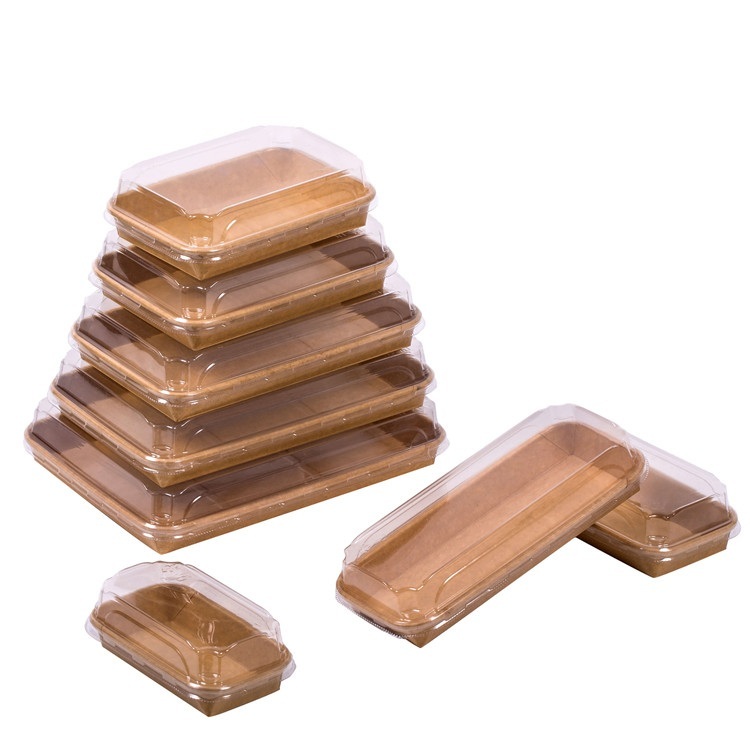
Grease Resistance and Rigidity
Sushi punishes weak packaging. Raw fish releases moisture, fried fillings bleed oil, and rice settles into any soft spot. Start with the barrier. Grease-proof paperboard slows the movement of oils into the paper structure, and that performance can come from fiber treatment, surface sizing, or a functional barrier coating rather than a plastic film. Ask your supplier for grease-resistance data, coating details, wet-strength figures, and food-contact documentation. The Kit Test screens grease resistance on paper and board, and ISO 16532 covers surface repellency and permeability methods. Neither replaces a trial with your actual food, temperature, and contact time. Tempura rolls and fried sushi deserve a grease-proof or functional barrier board, especially when you pack them shortly after preparation.
Rigidity matters just as much. A base that flexes lets the arrangement shift, and that reads as stale even when the fish is perfect. Paper and cardboard beat foam and plastic on structural stability, and a sturdy base holds its shape under the weight of the food. Share your heaviest portion with the supplier. A loaded dragon roll tells them more about stiffness needs than any spec sheet.
Aesthetics, Print, and Size
A White Paper Sushi Tray gives you a clean canvas and crisp print, which suits brands with tight color standards. A Plastic Free Paper Sushi Tray fits buyers who want to skip plastic coatings, so weigh that priority against barrier performance. Elementscup carries both formats within its Custom Paper Food Trays range, so you can compare them on equal footing.
Print decisions deserve a proof on the real substrate. The same ink shifts on white board, kraft, coated stock, and textured paper. Pale colors lose contrast on brown kraft, and deep brand colors need adjustment to stay consistent across batches.
|
Design Goal |
Possible Method |
What to Verify |
|---|---|---|
|
Strong brand color |
Process or spot-color printing |
Color consistency, substrate, batch variation |
|
Fine Japanese-inspired pattern |
Controlled linework, suitable resolution |
Line reproduction, detail loss |
|
Premium logo accent |
Foil stamping or compatible finish |
Adhesion, registration, tooling, cost |
|
Natural paper look |
Direct printing on selected board |
Ink appearance, contrast, surface variation |
|
Bilingual packaging |
Planned multi-language layout |
Font support, text direction, proofing |
Size follows portion and shape. Rectangular trays maximize surface area for rolls laid in rows. Round trays center weight on the hand and suit circular arrangements. Divided trays keep sashimi, desserts, and appetizers apart. Then settle lid type, refrigeration performance, and delivery distance. Kraft sushi trays handle short chilled runs well. Longer trips call for a tighter lid fit and a stiffer board.
Choosing Trays for Takeaway
Durability and Stackability
Takeaway trays face a harder life than any other format. They get filled hot, sealed fast, stacked in a bag, and bounced around for miles. Leak resistance, lid fit, and stackability all pull on each other, and transport distance plus order volume decide how much margin you need.
Leaks rarely announce themselves. Fudepkg notes that liquids escape through side seams, bottom seams, folded corners, the lid interface, micro pinholes, or coating defects. Sometimes nothing shows at first. The paper softens, wicks moisture, or delaminates, and failure arrives later. That delay lands squarely in the delivery window. Fudepkg also warns that longer orders keep exposing containers to vibration and tilting, and lid stability drops noticeably on long runs. Test for pressure and drops, not just a static water hold.
Stackability turns storage space into transport efficiency. Square formats stack neatly in one bag, which suits catering takeaway and bento-style builds. Watch the corners, though. They are where leak paths appear first, so coating quality and seam control matter more in a square tray than a round one.
Material choice sets the ceiling on all of this. Plastic catering trays outlast kraft paper trays under heavy loads and long hauls. Molded fiber and bagasse trays use recycled materials and fit shorter runs with moderate moisture. Kraft paper trays work well for dry or lightly saucy food on short trips. Each has a place, and Elementscup stocks Custom Paper Food Trays across these formats so you can match the material to the route.
Cost and Compliance
Compliance comes before price. PFAS compounds have historically delivered oil, grease, moisture, and heat resistance in molded fiber trays and grease-resistant paper, and that history now drives regulation. California, New York, Washington, Maine, Vermont, and Colorado restrict intentionally added PFAS, and the FDA has withdrawn many food-contact authorizations. In the EU, Regulation (EC) No. 1935/2004 governs food-contact materials. For paper and paperboard touching aqueous and fatty foods, FDA 21 CFR 176.170 sets the component rules.
Skip the vague "food-grade" claim. Ask for documentation naming the material and manufacturer, the intended food types, contact conditions, temperature and time limits, target market, and migration evidence. Include inks, coatings, and adhesives. Validate service temperature on the formed tray, not a flat lab coupon.
Volume drives unit cost. Small runs carry a higher rate per tray, and pricing steps down as quantities climb through bands like 100–500, 501–1,000, 1,001–5,000, and 5,000-plus units. Size, material, and printing shift the final figure too. Ordering 500 to 1,000 trays per configuration usually lands better economics for steady food service use.
Choosing Trays for Food Presentation
Visual Appeal and Print Quality
Presentation trays sell the dish before anyone tastes it. Customization gives you room to work: pick the size, design, and material that match your menu, whether you plate a hearty meal or delicate hors d'oeuvres. A grease-resistant coating keeps even messy dishes looking clean on the table.
Board type drives print quality more than any other choice. Uncoated kraft board is absorbent and warm brown, so ink lands with a slightly softened look — fine for pastry, bread, and dry goods. Coated folding carton holds sharp color and fine type, which suits trays where appearance carries the sale. SBS board stays white inside and out for vibrant color, kraft paperboard gives a raw, earthy look, and recycled CCNB board keeps costs down.
Finish and printing method shape the final result. Aqueous coating allows better print quality with little moisture resistance, while UV coating delivers a glossy, premium finish for limited runs. Offset printing gives crisp images and bright color on bulk orders, digital printing fits short runs and fast turnarounds, and screen printing adds texture or metallic accents.
Sizing, Finish, and Serving Compatibility
Match the tray to the food, not the other way around. Boat trays suit fries and snacks with angled walls and a grease-resistant coating. Burger trays need depth for toppings plus room for a side. Nacho trays want a compartment for cheese sauce. Dessert trays call for clean presentation and a light grease barrier.
Capacity labels help you size fast. A #25 tray holds about 1/4 lb for small sides, #100 covers large fries or a loaded hot dog, and #300 handles shareable plates. Test before you commit:
-
Plate the item exactly as you serve it, toppings included.
-
Measure length and width at the widest points.
-
Measure height, including stacked layers.
-
Add clearance so food isn't pressed against the walls.
-
Measure each compartment separately if you need dividers.
-
Order samples and run a real service test.
A tray that's too big makes portions look small and wastes board. Too small, and food hangs over the edges. Elementscup supplies Custom Paper Food Trays across these formats, so you can test sizes against your actual menu.
Comparing Custom Paper Food Trays
Reading the Comparison Table
A useful comparison puts four columns side by side: performance, application fit, compliance, and cost. Read each row as a whole, not column by column. A tray that wins on price may lose on grease resistance, and that trade-off matters more for sushi than for dry snacks.
|
Tray Option |
Performance |
Best Application Fit |
Compliance Notes |
Cost Position |
|---|---|---|---|---|
|
White paper tray |
Crisp print, moderate barrier |
Sushi, presentation |
Confirm food-contact docs for coating |
Mid-range |
|
Kraft paper tray |
Natural look, lower grease hold |
Short-run takeaway, rustic service |
Check barrier and PFAS status |
Lower |
|
Plastic-free coated tray |
Good grease hold, no plastic film |
Sushi, eco-focused buyers |
Verify coating certification |
Higher |
|
Deep grease-resistant boat |
High moisture and grease tolerance |
Loaded takeaway, sauced food |
Confirm migration testing |
Mid to higher |
|
Molded fiber or bagasse |
Sturdy, recycled content |
Catering, longer hauls |
Check destination rules |
Varies |
Fudepkg notes that cost per service unit within one material path beats a single price per container across formats. Board grade, coating, forming complexity, and print coverage all shift the number.
Matching Priorities to the Right Tray
Start with your top priority, then let the table narrow the field. If grease resistance leads, pick a coated or plastic-free barrier tray and test it with your oiliest item. If stackability leads, favor shallow formats with high nesting density. If print quality leads, choose white board for sharp color. If budget leads, accept a lighter barrier and shorter hold times.
Fudepkg suggests testing two or three options with the same food, portion, and holding time, then recording stiffness, strike-through, and handling speed. Keep the approved sample as your reference. Elementscup supplies Custom Paper Food Trays across all three use cases, so you can run that test on equal terms.
Run every tray through the same three filters: application fit, technical performance, and cost plus compliance. That checklist works for sushi, takeaway, and presentation alike. Skip a filter and you either overpay or under-protect the food.
Then close with a short sequence:
-
Name the use case.
-
Set the must-have performance traits, such as grease resistance, rigidity, stackability, or print quality.
-
Confirm food-contact compliance and budget.
Elementscup supplies Custom Paper Food Trays across all three use cases, so you can run that sequence once and compare every option on equal terms.
FAQ
What board weight should I pick for a loaded tray?
Match the board to your heaviest portion and the distance it travels. Dense paper pulp raises stiffness, so the tray resists flexing under load. Share your heaviest item with the supplier and let them match rigidity to that load. A lighter grade may bow once the food settles.
Do I need a coating on my trays?
Yes for anything hot, oily, or saucy. A PE coating handles grease and moisture, though it complicates recycling unless separated. Plastic-free barrier options exist for buyers who want to skip plastic film. Uncoated paper absorbs oil and softens, so a barrier matters for sushi and fried food.
How do I choose between white and kraft board?
Pick white board when brand color must stay crisp. Printed colors appear more muted on kraft, so tight color standards usually point to white. Kraft suits a natural, earthy look and rustic service. A White Paper Sushi Tray gives you that clean canvas for sharp print.
What compliance details should I confirm before ordering?
Ask for documentation naming the material and manufacturer, the intended food types, contact conditions, and migration evidence. Include inks, coatings, and adhesives. Check PFAS rules in your target market and confirm food-contact rules such as FDA 21 CFR 176.170 or EU Regulation 1935/2004.
Can I test trays before committing to a full order?
Always. Plate your item exactly as you serve it, measure at the widest points, and add clearance. Order samples and run a real service test with your oiliest or heaviest dish. Elementscup supplies Custom Paper Food Trays, including a Plastic Free Paper Sushi Tray, so you can compare options on equal terms.