Cosmetic formulations are becoming more sophisticated. Sunscreens, active skincare products, and specialty creams may contain ingredients that are sensitive to oxygen, moisture, light, or changes in their surrounding environment. For these products, packaging needs to do more than hold the formula. It must help maintain product quality throughout storage, transportation, and daily use.
A five-layer EVOH packaging structure is one solution worth considering. By combining polyethylene-based structural layers with an EVOH barrier layer and suitable bonding layers, manufacturers can create a package that balances flexibility, processing performance, and improved oxygen protection.
But what does five-layer construction actually mean? How does EVOH work, and when is it worth the additional material and manufacturing complexity? This guide explains the structure, performance factors, applications, and quality checks that cosmetic brands should understand before choosing a multilayer package.
Quick Answer
A five-layer EVOH cosmetic tube or bottle typically combines polyethylene structural layers, adhesive or tie layers, and an EVOH oxygen-barrier layer. The polyethylene provides mechanical strength and flexibility, the tie layers help bond materials that do not naturally adhere well, and EVOH reduces oxygen transmission through the package wall.
This construction is particularly relevant for sunscreen packaging and selected skincare products that require additional oxygen protection. However, EVOH is primarily an oxygen barrier, not a complete solution for every packaging challenge. Moisture exposure, UV protection, closure integrity, and formula compatibility must also be evaluated.
Key Takeaways
- EVOH is an ethylene vinyl alcohol copolymer widely used as an oxygen-barrier material in multilayer packaging.
- A five-layer construction can combine PE structural layers, tie layers, and an EVOH barrier layer.
- The main advantage of EVOH is reduced oxygen transmission, which can help protect oxygen-sensitive formulations.
- EVOH performance is affected by humidity, material grade, layer thickness, and the complete package design.
- Sunscreen packaging must also address light exposure, dispensing, sealing, and compatibility with UV filters and other formula ingredients.
- A barrier layer should be validated through material testing and finished-package stability testing before mass production.
1. What Is EVOH and Why Is It Used in Cosmetic Packaging?
EVOH stands for ethylene vinyl alcohol copolymer. It is a specialized thermoplastic material valued for its ability to restrict oxygen transmission. Compared with many conventional packaging polymers, EVOH can provide a significantly stronger oxygen barrier when used under suitable conditions.
This property comes from its molecular structure. EVOH contains hydroxyl groups that create strong intermolecular interactions, making it difficult for oxygen molecules to diffuse through the material under appropriate conditions.
However, EVOH has an important limitation: its barrier performance is sensitive to moisture. When exposed to higher humidity, water can affect the interactions within the polymer and reduce its oxygen-barrier performance. This is why EVOH is usually protected between other polymer layers rather than used as an exposed standalone packaging material.
In cosmetic packaging, PE layers can help protect the EVOH layer from external moisture and provide a practical surface for package formation and product contact. The exact arrangement depends on the manufacturer's extrusion process and the required performance.
2. How Does a Five-Layer EVOH Structure Work?
A five-layer structure is designed to make different materials work together. Rather than expecting one polymer to provide every required property, each layer performs a specific function.
A representative five-layer arrangement can be illustrated as follows:
| Layer | Typical Material | Main Function |
|---|---|---|
| Layer 1: Inner layer | PE | Provides the product-contact surface and supports sealing. |
| Layer 2: Bonding layer | Tie resin | Bonds the PE and EVOH materials. |
| Layer 3: Barrier layer | EVOH | Reduces oxygen transmission through the package wall. |
| Layer 4: Bonding layer | Tie resin | Maintains adhesion between the barrier and outer structure. |
| Layer 5: Outer layer | PE | Provides mechanical support, surface quality, and protection. |
This is a representative layer arrangement, not a universal specification. Actual layer order, resin grades, and thickness ratios vary by supplier. Some structures may use different PE grades or additional material configurations depending on the extrusion process.
The important point is that the five layers work as a system. A high-performance EVOH resin cannot compensate for poor bonding, inconsistent layer thickness, or defective sealing. The performance of the finished package depends on the quality of the entire structure.
3. Five Major Benefits of EVOH Cosmetic Packaging
1. Improved Oxygen Barrier Performance
Oxygen can participate in oxidation reactions that affect cosmetic ingredients. Depending on the formulation, oxidation may change color, odor, texture, or the concentration of certain active ingredients.
An EVOH barrier layer can reduce oxygen transmission through the package wall, helping limit one potential route of oxygen exposure. This can be useful for selected antioxidant-rich products, active skincare formulations, and other products with specific oxygen sensitivity requirements.
It is important to distinguish between material barrier performance and product shelf life. A lower oxygen transmission rate does not automatically guarantee a longer shelf life. Formula stability, filling conditions, package sealing, storage temperature, and the initial oxygen level inside the package also matter.
2. A Better Balance Between Barrier Protection and Flexibility
Full aluminum packaging offers a strong metal barrier, but some brands prefer the look and handling characteristics of plastic packaging. A multilayer EVOH structure provides another option.
The PE layers help maintain flexibility and support squeeze dispensing, while the EVOH layer provides additional oxygen protection. This combination can be useful for products that need a barrier upgrade without changing to a full aluminum package.
3. Protection for Formulations Sensitive to Environmental Exposure
Some cosmetic ingredients are more sensitive to oxygen than others. The degree of protection required depends on the specific formula, concentration, pH, packaging headspace, and intended storage conditions.
An EVOH layer may help reduce oxygen exposure through the tube wall, but it should not be treated as a universal protective solution. If the product is also sensitive to light, the package may need an opaque or UV-protective outer design. If moisture transfer is critical, WVTR performance must be checked separately.
4. Support for Customized Packaging Design
Multilayer structures can be developed into different package formats, depending on the manufacturing process. Brands can evaluate different capacities, diameters, shapes, cap designs, colors, and printing effects.
For a sunscreen range, this provides room to develop travel-size products, daily-use packaging, and coordinated product families. However, changes in tube geometry or wall thickness should be checked to ensure that the barrier structure remains consistent throughout the package.
5. More Controlled Packaging Performance
When the material structure, extrusion process, and sealing conditions are properly controlled, a multilayer package can provide a more predictable barrier specification than relying on a conventional PE wall alone.
For brands purchasing packaging in volume, this means the supplier should be able to document the material construction, monitor layer consistency, and verify the performance of production samples. Consistency between batches is just as important as the performance of the first sample.
4. Why Is EVOH Relevant to Sunscreen Tube Packaging?
Sunscreen products present several packaging challenges. Their formulas may contain combinations of UV filters, oils, emulsifiers, film-forming agents, fragrances, and other ingredients. These components can have different compatibility and stability requirements.
The packaging must also support regular consumer use. Sunscreen is often carried in bags, used outdoors, exposed to changing temperatures, and dispensed repeatedly. A suitable package therefore needs to balance product protection with portability, leakage resistance, and dispensing convenience.
Oxygen Protection Is Only One Part of Sunscreen Stability
An EVOH layer can reduce oxygen transmission through the tube wall, but it does not automatically block all UV radiation. If a sunscreen formula is sensitive to light, the outer layer should be designed with suitable pigments, opacity, or other UV-protective measures.
Similarly, an EVOH structure does not eliminate the need for compatibility testing with organic or inorganic UV filters. The formula should be evaluated for changes in appearance, odor, viscosity, and other relevant quality attributes during storage.
Choosing the Right Capacity and Dispensing Design
Sunscreen packaging often uses compact capacities for travel or outdoor use and larger formats for regular household consumption. The ideal size depends on the product positioning, target market, application frequency, and retail channel.
The closure also matters. Screw caps, flip-top caps, and pump mechanisms offer different levels of convenience and control. The selected closure should be tested for leakage, opening force, dispensing consistency, and compatibility with the filling line.
Brands developing custom sunscreen tube packaging should assess the complete package rather than selecting a tube body independently of the cap and dispensing system.
5. EVOH vs Standard PE: When Is the Upgrade Worth It?
Standard PE packaging and five-layer EVOH packaging serve different requirements. The decision should be based on the product's actual stability needs rather than the assumption that more layers always mean better packaging.
| Comparison Factor | Standard PE | Five-Layer EVOH |
|---|---|---|
| Material construction | PE-based wall structure | PE, tie layers, and EVOH barrier layer |
| Oxygen barrier | Relatively limited | Improved when properly designed and protected from moisture |
| Moisture barrier | Depends on PE grade and thickness | Depends mainly on the surrounding polymer layers and complete design |
| Light protection | Depends on pigment and opacity | Still requires a suitable outer layer or UV-protective design |
| Manufacturing complexity | Relatively straightforward | Requires multilayer extrusion and layer-control capability |
| Typical application consideration | Conventional lotions, creams, and cleansers | Selected sunscreen and barrier-sensitive skincare products |
| Cost consideration | Usually a simpler material structure | Additional materials and process controls may increase cost |
The upgrade is most worthwhile when testing shows that the standard PE package does not adequately meet the formula's oxygen-barrier requirements. If the product is relatively stable and does not need additional protection, a standard PE tube may be a more economical solution.
6. Important Quality Tests for Five-Layer EVOH Packaging
A multilayer structure should be evaluated through measurable performance criteria. Cosmetic brands should request relevant technical data and confirm that the test samples represent the actual production design.
| Test Item | What It Evaluates | Why It Matters |
|---|---|---|
| Oxygen Transmission Rate (OTR) | Oxygen passing through the material or package over time | Assesses the oxygen-barrier performance. |
| Water Vapor Transmission Rate (WVTR) | Moisture transmission through the structure | Helps evaluate moisture protection. |
| Layer Thickness Inspection | Consistency of individual material layers | Identifies uneven barrier distribution. |
| Interlayer Adhesion | Bonding strength between material layers | Helps prevent delamination. |
| Leakage and Seal Testing | Integrity of the closure, shoulder, and tail seal | Checks finished-package reliability. |
| Formula Compatibility | Interaction between the formula and package materials | Identifies changes in appearance, odor, or package integrity. |
| Stability Testing | Product behavior under defined storage conditions | Supports shelf-life evaluation. |
For oxygen transmission, ASTM D3985 is a commonly referenced test method for measuring oxygen gas transmission through plastic film and sheeting using a coulometric sensor. For water vapor transmission, ASTM F1249 is another commonly referenced method using a modulated infrared sensor.
Test conditions must be reported with the results. Temperature and relative humidity are especially important for EVOH because moisture can affect its barrier performance. Results from different conditions should not be compared as if they were equivalent.
It is also important to distinguish a flat-film test from a complete-package test. A tube may have excellent material-level OTR results but still perform poorly if its closure, tail seal, or shoulder connection is defective.
7. Manufacturing Example: Huihong Packaging's EVOH Sunscreen Packaging
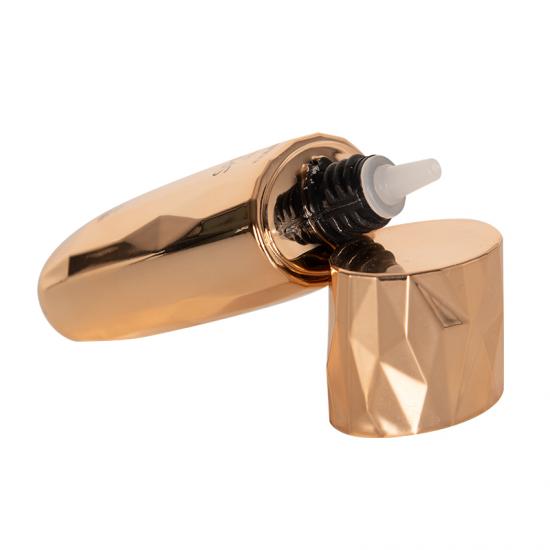
Huihong Packaging has published several sunscreen packaging products using multilayer EVOH structures. One example is its 50 ml oval egg-shape EVOH squeeze sunscreen bottle. The product listing identifies a five-layer structure and a plastic squeeze design intended for sunscreen applications.
The product provides a practical reference for brands considering a compact sunscreen package with a customized shape. Its published product format can be used as a starting point for discussions about capacity, appearance, dispensing, and customization.
For a project requiring five-layer EVOH cosmetic packaging, buyers should request the detailed layer construction, material grades, barrier test conditions, closure specifications, and formula compatibility information rather than relying on the five-layer description alone.
Huihong Packaging was established in 1996 and operates in Foshan, China. Its published company information describes manufacturing capabilities that include mold development, injection molding, printing, assembly, and inspection. The company also offers PE, ABL, aluminum, and functional cosmetic packaging options.
For sunscreen projects, a practical development process should include the following steps:
- Confirm the formula, target capacity, and required shelf-life conditions.
- Determine whether an oxygen barrier is necessary based on formulation stability requirements.
- Confirm the five-layer construction, resin grades, and material thickness specifications.
- Review tube samples for appearance, flexibility, closure fit, and dispensing performance.
- Conduct compatibility, leakage, and stability tests with the actual sunscreen formula.
- Verify the filling and sealing process before approving the final production sample.
The key is to develop the packaging around the formulation and production requirements. A sample that looks attractive is not sufficient evidence of long-term package performance.
8. What Should Buyers Ask an EVOH Tube Manufacturer?
When evaluating an EVOH packaging supplier, buyers should go beyond asking whether a product has five layers. The following questions help determine whether the manufacturer can deliver a structure that meets the project's actual requirements.
- What is the exact material composition and layer arrangement?
- Which EVOH grade is used, and what is the nominal barrier-layer thickness?
- Can the supplier provide OTR and WVTR test data with temperature and humidity conditions?
- How is interlayer adhesion controlled during production?
- Are samples available for testing with the buyer's actual formula?
- What filling and tail-sealing conditions are recommended?
- What are the available capacities, diameters, cap designs, printing methods, and customization options?
- How are production batches inspected and how are material changes controlled?
A supplier that can answer these questions with technical documentation and representative samples is better positioned to support a reliable packaging project than one that only offers a generic five-layer product description.
9. Frequently Asked Questions
What is the main purpose of EVOH in cosmetic tubes?
EVOH is mainly used to reduce oxygen transmission through the package wall. This can help protect formulas that are sensitive to oxidation. Its performance depends on material grade, thickness, humidity, and the complete package structure.
Does a five-layer EVOH tube block UV light?
Not necessarily. EVOH is primarily an oxygen-barrier material. UV and visible-light protection depend on the outer layer, pigments, opacity, and package design. Brands with light-sensitive formulas should request appropriate light-transmission or UV-protection data.
Is EVOH packaging suitable for all sunscreen formulations?
No. Suitability depends on the formula's ingredients, stability requirements, and interaction with the package. The actual sunscreen formulation should undergo compatibility and stability testing before commercial production.
Why does EVOH need PE or other protective layers?
EVOH provides strong oxygen-barrier performance under suitable conditions, but its performance is sensitive to moisture. Surrounding polymer layers help protect it and provide structural and processing properties required for the finished package.
Is five-layer packaging always better than standard PE packaging?
No. Five-layer packaging adds material and manufacturing complexity. If a formulation does not require additional oxygen protection, standard PE may meet the technical requirements at a lower cost. Material selection should be based on test results and product needs.
How can I verify the barrier performance of an EVOH tube?
Request OTR data, the relevant test method, temperature, relative humidity, specimen thickness, and test unit. Also ask whether the result applies to the material sample or the complete finished package. Finished-package leakage and stability tests provide additional evidence of actual performance.
Can the capacity and appearance of EVOH sunscreen packaging be customized?
Customization depends on the manufacturer's production equipment and available tooling. Capacity, tube shape, color, printing, and closure design can be discussed during product development. Any structural change should be reviewed to ensure that the required barrier performance is maintained.
For brands developing sunscreen or barrier-sensitive skincare products, choosing the right EVOH structure is an engineering decision as much as a packaging design decision. Reviewing the complete material specification, testing the actual formula, and confirming production consistency will help reduce packaging risks before a large order is placed.
Huihong Packaging provides customized cosmetic packaging solutions, including PE tubes, ABL tubes, aluminum tubes, and multilayer sunscreen packaging. Contact the team to discuss your required capacity, material structure, design, and sample development.